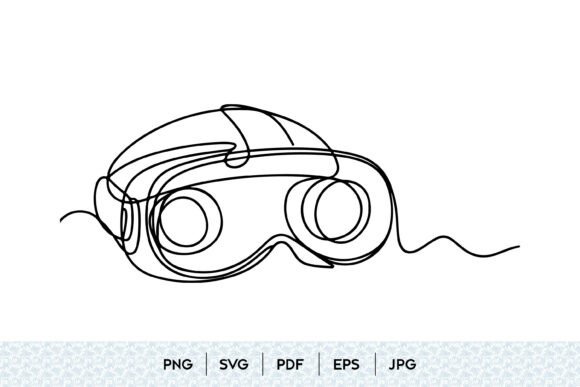
VR Headset Line Art SVG for Modern Graphics and Illustrations
In the fast-paced world of digital publishing, the difference between a scroll-past and a click-through often comes down to visual hierarchy. As a blog designer who has spent years curating assets for editorial projects, I know that every image must earn its place on the page. When I first encountered the VR Headset Line Art SVG, I immediately recognized its potential to elevate content in the tech, gaming, and future-tech niches. This is not just a clipart image; it is a strategic graphic design asset that brings a clean, modern aesthetic to complex topics.
The first impression this vector offers is one of sleek minimalism. The line art style strips away unnecessary clutter, focusing entirely on the silhouette of the virtual reality device. This creates an editorial mood that feels professional yet forward-thinking. It avoids the cheesy or overly cartoonish look that can undermine reader trust. Instead, it suggests innovation and clarity. For a content creator writing about emerging technologies, this illustration supports a narrative of sophistication. It works beautifully for lifestyle-focused blogs that cover gadgets, educational sites explaining digital concepts, or even playful creative spaces discussing the metaverse. The design is versatile enough to feel at home in a serious corporate whitepaper or a vibrant newsletter banner.
Integrating Editorial Design into Your Publishing Workflow
Imagine you are preparing a week's worth of content for your affiliate blog. You need featured images, Pinterest pins, and a downloadable lead magnet for a new guide on VR hardware. In this scenario, the VR Headset Line Art SVG becomes the backbone of your visual identity. Unlike raster images that pixelate when scaled, this vector format allows you to resize the asset from a tiny mobile thumbnail to a massive website header without losing any quality.
I have found that using high-quality graphics like this improves the perceived value of your content. When a visitor lands on a post with crisp, intentional imagery, they assume the information inside is equally well-researched. This specific illustration fits seamlessly into various real-world publishing situations. You can use it as a standalone hero image to introduce a deep-dive article. It serves as an excellent accent within editorial layouts, breaking up dense text blocks. For newsletter creators, placing this graphic in the header adds a touch of polish that encourages open rates.
Furthermore, this asset is perfect for creating digital products. If you are an online educator offering a course on virtual reality development, this line art can serve as the cover for your eBook or the icon for your digital guide. Affiliate marketers will appreciate how easily it integrates into comparison charts or "best of" lists. By using consistent design assets across your media kit, social media posts, and paid ads, you build a stronger brand identity that readers can recognize instantly.
Maximizing Visual Hierarchy and Click-Through Potential
Visual communication is about guiding the eye. A well-placed graphic can direct attention to your call-to-action or highlight a key statistic. The VR Headset Line Art SVG excels here because its negative space allows you to layer text over it effectively. On a Pinterest pin, where users scan quickly, this clean outline stands out against colorful backgrounds, ensuring your headline remains legible. It creates a clear visual hierarchy that separates the image from the text, making the content easier to digest.
When used strategically, these graphics support better performance metrics. Stronger first impressions lead to longer time-on-page. Consistent branding increases return visits. By incorporating this illustration into your category thumbnails, you help readers navigate your site with ease. They learn to associate that specific sleek line art with your expert content on technology. This recognition builds trust over time, turning casual browsers into loyal subscribers.
Strategic Placement for Maximum Impact
While this asset is incredibly flexible, knowing where to deploy it is crucial for maintaining editorial quality. It shines brightest in hero sections where you want to make a bold statement. It is ideal for blog graphics that accompany reviews of hardware or software. For social media previews, especially on platforms like Instagram or LinkedIn, this image conveys a modern design sensibility that appeals to tech-savvy audiences.
It also works wonderfully as an editorial accent. Imagine a sidebar widget or a section divider in a long-form article. Placing the line art there breaks the monotony of text and invites the reader to continue scrolling. For downloadable resources, such as worksheets or printables, this graphic adds a professional finish that justifies the download. It transforms a simple PDF into a branded digital product that reflects well on your small business or creative enterprise.
Navigating Usage Constraints and Technical Considerations
However, no single graphic is a magic bullet. There are scenarios where you must exercise caution. If your website relies on a very strict, ultra-minimalist visual system, a distinct object like a headset might feel too busy compared to abstract shapes. In serious professional niches where the tone is extremely conservative, ensure the style matches your existing voice. Additionally, be mindful of mobile usage. While the SVG scales perfectly, always test how the image appears as a small thumbnail on mobile devices. Does it remain recognizable? Is it too detailed for a 100px square?
Text-heavy blog images require careful handling. Do not let the illustration compete with your typography. Use it as a background element or frame the text around it rather than overlaying it directly unless you add sufficient contrast. Low-contrast backgrounds can make the line art disappear, so always preview the asset against your actual color palette before finalizing the layout.
Publisher Notes for Professional Implementation
To get the most out of this graphic design asset, follow a rigorous testing protocol. Always preview the VR Headset Line Art SVG inside a real blog layout, not just in isolation. Check how it looks alongside different font styles. Try pairing the modern lines with a serif font for a classic editorial look, or a sans-serif font for a tech-forward vibe. Test it with script or handwritten fonts if you want a more creative, artistic contrast.
Technical optimization is non-negotiable for web performance. Although SVGs are lightweight, check the file size of the converted PNGs if you plan to use them in email newsletters. Compress images properly to ensure fast load times, which directly impacts SEO rankings. Finally, confirm the commercial license before using the asset on monetized websites, affiliate pages, or paid content products. Ensure you have the rights to modify the file, whether you are recoloring it to match your brand identity or integrating it into a Canva template for your team.
This package typically includes a comprehensive set of files, such as a PNG at 300 ppi for print-ready documents, a JPG for general web use, an EPS for vector editing, and the essential SVG for responsive web design. Having all these formats in one zip file streamlines your workflow significantly. Whether you are designing a website header, a digital ad, or a creative marketplace listing, having access to high-resolution versions ensures your output remains sharp and professional.
In conclusion, the VR Headset Line Art SVG is more than just a decorative element; it is a tool for effective content marketing. It helps you communicate complex ideas simply and elegantly. By integrating this illustration into your editorial strategy, you enhance your visual storytelling and create a more trustworthy, polished online presence. For bloggers, publishers, and digital marketers looking to upgrade their creative design toolkit, this asset delivers exactly what is needed to stand out in a crowded digital landscape.